The Silent Revolution in Healthcare Documentation
April 9, 2026Healthcare professionals today face an overwhelming administrative burden that often pulls them away from what truly matters—patient care. From documenting consultations to updating electronic health records (EHRs), the workload can be exhausting and time-consuming. Enter the AI medical scribe, a transformative solution that is quietly reshaping how clinicians operate. By combining advanced technology with practical usability, this innovation allows doctors to focus more on patients and less on paperwork, ultimately improving both efficiency and care quality.
How the AI medical scribe is Changing Clinical Workflows
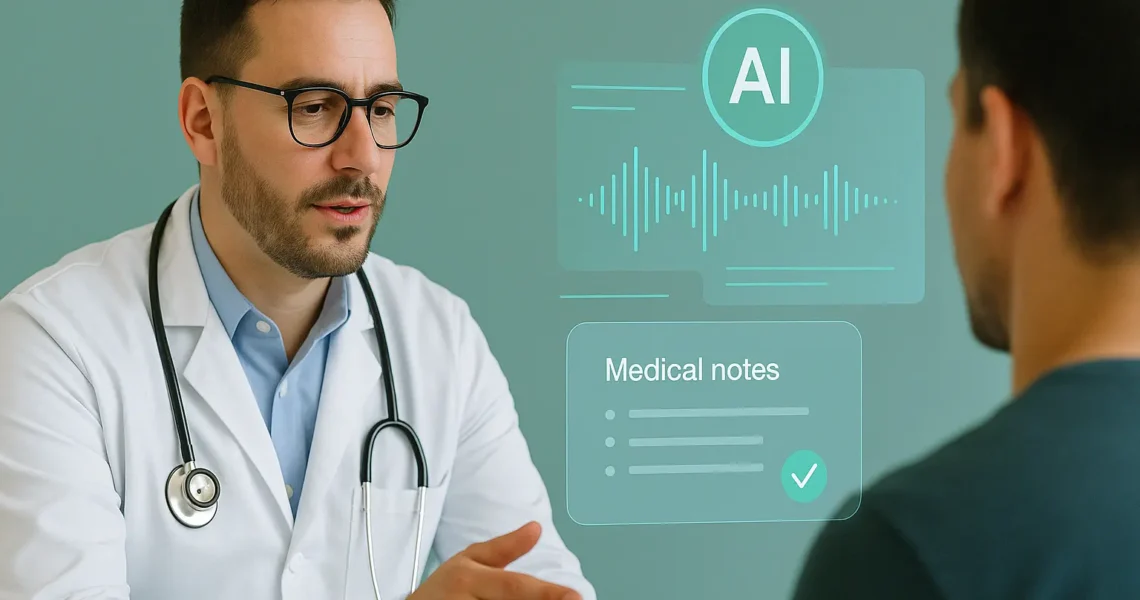
The AI medical scribe is designed to listen, interpret, and document patient encounters in real time. Using natural language processing and machine learning, it captures conversations between doctors and patients and converts them into structured medical notes. This process not only reduces the time spent on documentation but also enhances accuracy and consistency.
Unlike traditional scribes, which require human resources and scheduling, AI-powered systems operate seamlessly in the background. They integrate with existing EHR systems and adapt to different medical specialties. Over time, they learn the preferences of individual physicians, tailoring documentation styles accordingly.
One of the most compelling advantages is the reduction in burnout. Physicians often spend hours after clinic sessions completing notes, a phenomenon commonly known as “pajama time.” With AI handling documentation, clinicians regain valuable personal time and experience improved work-life balance.
Key Benefits of Using AI in Medical Documentation
- Improved efficiency and reduced administrative workload
- Enhanced accuracy in clinical notes
- Better patient engagement during consultations
- Faster turnaround for medical records
Why Every Practice Should Consider an AI medical scribe
Adopting an AI medical scribe is not just about convenience—it’s about staying competitive in a rapidly evolving healthcare landscape. Patients today expect more personalized attention, and clinics must find ways to deliver that without increasing operational strain.
With AI support, doctors can maintain eye contact, actively listen, and build stronger relationships with patients. This human-centered approach leads to better diagnoses, improved patient satisfaction, and stronger trust. Additionally, accurate and timely documentation can reduce the risk of compliance issues and medical errors.
Financially, investment in AI technology often pays off through increased productivity. Physicians can see more patients without compromising quality, and administrative costs can be significantly reduced. For smaller practices, this can be a gamechanger, leveling the playing field with larger healthcare organizations.
Addressing Concerns and Misconceptions
While the benefits are clear, some practitioners may hesitate due to concerns about data security and reliability. Modern AI systems are built with robust encryption and comply with healthcare regulations, ensuring patient data remains protected. Moreover, these systems are designed to assist—not replace—medical professionals, maintaining human oversight at every step.
Another misconception is that AI lacks the nuance required for medical documentation. Continuous advancements in machine learning have enabled these tools to understand context, medical terminology, and even subtle conversational cues with impressive accuracy.

AI medical scribe
The Future of Healthcare Documentation
As technology continues to evolve, the role of AI in healthcare will only expand. The AI medical scribe represents just the beginning of a broader shift toward intelligent automation in clinical settings. Future developments may include predictive analytics, real-time clinical decision support, and even deeper integration with patient management systems.
Healthcare is ultimately about people, and any tool that brings clinicians closer to their patients is a step in the right direction. By reducing administrative burdens and enhancing efficiency, AI empowers doctors to practice medicine the way it was always meant to be—focused, compassionate, and patient-centered.
Conclusion
The rise of the AI medical scribe marks a pivotal moment in modern healthcare. It bridges the gap between technology and human care, offering a practical solution to one of the industry’s most persistent challenges. As more practices embrace this innovation, the benefits will ripple across the entire healthcare ecosystem, improving outcomes for both providers and patients. In a world where time is one of the most valuable resources, AI is helping clinicians reclaim it—one note at a time.